
Glimpses of life in Israel and Iran amid war.
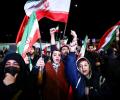
'American stature has been reduced because they have not been able to achieve their aims.'

Vayu Shakti-2026 showcased the Indian Air Force's readiness for combat operations in both day and night conditions.

Double Olympic medallist PV Sindhu was stranded at Dubai airport en route to the All England Open badminton tournament due to flight suspensions caused by escalating tensions in the Middle East.

An email threatening missile and bomb attacks on the Maharashtra Vidhan Bhavan and other key locations in Mumbai prompted a security alert and extensive searches.

The Finalissima match between Spain and Argentina in Doha is in doubt after the Qatar Football Association suspended soccer tournaments indefinitely following U.S. and Israeli attacks on Iran and retaliatory missiles fired at the Arabian Peninsula.

US Central Command (CENTCOM) released footage of a maritime operation where Marines boarded an Iranian-flagged vessel, the Touska, in the Gulf of Oman, leading to heightened tensions and threats of retaliation from Iran.

The British government has called for a negotiated solution to prevent further escalation of conflict in the Middle East following joint strikes by the US and Israel on Iran, emphasizing the safety of UK nationals and the need to prevent Iran from developing nuclear weapons.

Admiral Dinesh K Tripathi awarded Yudh Seva Medals to Vice Admiral A N Pramod and Vice Admiral Rahul Gokhale for their distinguished service during Operation Sindoor. The operation involved a strong naval response to security concerns, showcasing strategic planning and effective deployment of naval assets.

Economist Jeffrey Sachs saw Gulf nations' decision to partner with the US through the Abraham Accords as an "invitation for disaster" as it made them more dependent on American protection.

Iranian Foreign Minister Seyed Abbas Araghchi has warned the United States that Iran is ready to confront American troops if the US launches a ground invasion, calling such a move a potential 'big disaster' for Washington.

'Despite the large number of missiles and drones we have already launched, we still possess reserves and missile cities whose doors have not yet been opened,' says Iran's Consul-General Saeid Reza Mosayeb Motlagh.

The purge in Washington does not pause the war. Strikes continue, Hormuz remains closed, and Brent crude is still dancing around $109 a barrel. For India, the command chaos in the Pentagon is another layer of uncertainty piled on five weeks of conflict that was already straining every buffer Delhi has.
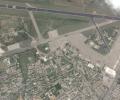
The Pakistani government has once again found itself embarrassed on the world stage, now acknowledging the impact of India's strategic and precision strikes on its military installation during the escalation in May, following Operation Sindoor, which came in retaliation for the April 22 Pahalgam terror attack that killed 26 civilians.

Iran was the chance to arrange a concert of nations, to actually be a Vishwaguru. Instead, we are watching from the sidelines as Pakistan, the same country that is apparently still at war with Afghanistan, hosts talks between US-Israel and Iran. The irony is hard to miss, points out Amberish K Diwanji.

In his first major national address since hostilities began, Trump said the ongoing military campaign, dubbed 'Operation Epic Fury', has delivered 'swift, decisive, overwhelming victories'.

US-Israel air attacks intensified on the seventh day of war, striking Tehran and other Iranian cities.

Amidst rising tensions in the Middle East, an Iranian drone struck a British RAF base in Cyprus, prompting the UK to allow US defensive operations and consider evacuation plans for British citizens in the region.

Secretary of State Marco Rubio urged its citizens to immediately depart from several Middle Eastern countries, citing "serious safety risks."

Israel extends nationwide restrictions and warns citizens of potential attacks from Iran and Hezbollah, with the Home Front Command maintaining current guidelines until further assessment.

The BSE Sensex and the Nifty 50 declined around 4.5 per cent each since the start of the West Asia conflict.

Prime Minister Narendra Modi spoke with Israeli Prime Minister Benjamin Netanyahu to discuss the escalating situation in West Asia, conveying India's concerns and emphasizing the importance of civilian safety. The conversation follows recent attacks and heightened tensions in the region.
China has condemned the attack on an elementary school in Iran and pledged USD 200,000 in emergency humanitarian assistance.

Taking Kharg would give the US control over virtually all of Iran's oil exports and thus provide significant leverage, notes Prem Panicker in his must read daily blog on the Gulf War. It would also put American troops within range of Iran's remaining missiles, drones, and artillery on a piece of real estate that is just eight square miles in size, and just 15 miles from the Iranian mainland.

For weeks, the war skirted the edge of catastrophe without tipping over. Missiles flew, there was much destruction, commanders were assassinated, cities across the Gulf and even in Israel struggled to absorb the shock. But one line held: Energy infrastructure, the arteries of the global economy, remained largely untouched. That is no longer true. Prem Panicker continues his must read daily blog on the Gulf War.

Formula One has cancelled the Bahrain and Saudi Arabian Grands Prix scheduled for April due to escalating Middle East tensions, reducing the 2026 F1 calendar from 24 to 22 races.
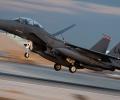
The military command clarified in a statement published on X that the aircraft were engaged in error during active combat operations on Sunday.

Sensex and Nifty post steepest weekly loss in over a year, falling nearly 3 per cent.

US President Donald Trump has announced plans to clear the Strait of Hormuz to secure the vital oil corridor, citing risks to global energy supplies and criticising other nations' inaction.

Russia has shared intelligence with Iran that could help Tehran target American warships, aircraft and other military assets in the region, according to United States intelligence assessments cited by media reports, marking the first indication of Moscow's possible involvement in the ongoing conflict. Officials familiar with US intelligence findings said a significant portion of the shared information reportedly includes imagery from Russia's network of surveillance satellites.

US President Donald Trump threatened to bomb Iran if a deal is not reached before the ceasefire ends, while Pakistan urged both sides to extend the truce and pursue diplomacy.

Reports are emerging that Ali Larijani, a key Iranian security official, was allegedly targetted in an Israeli airstrike, escalating tensions in the region.

'Much will depend on the position of the United States.' 'It will have to be seen to what extent the US will be more interested in achieving some form of a deal and to what extent Israel will be allowed to continue to carry out both airstrikes and the killing of Iranian officials.'

Karex, the Malaysian company that makes roughly one in five of the world's condoms -- about five billion a year, supplying Durex and Trojan among others -- announced this week that it is raising prices by up to 30 percent. The reason is the Strait of Hormuz.

According to Hezbollah, it fired a swarm of drones at radar sites and control rooms at the base on Tuesday, describing the move as retaliation for Israeli strikes.

The question is no longer whether the war will expand. It has. The next few days will tell us whether the war stabilises around Hormuz or whether the Strait itself becomes the trigger for a far larger rupture. What to watch for over the next 48 hours is simple: Any move by the US toward direct naval control of the Strait; any credible Iranian attempt to disrupt or mine shipping lanes and, critically, whether energy infrastructure in the Gulf continues to be targeted.If those lines are crossed in tandem, the war will no longer be containable within the region.

'What we have yet to see on either the US or the Iranian side is willingness to compromise on their ultimate demands and the flexibility to reach an agreement to end the war.

Amidst escalating tensions in West Asia, Pakistan's defence chief visited Saudi Arabia to discuss regional security and the mutual defence pact between the two nations, focusing on de-escalation strategies.

'In such a scenario, Iran could proclaim itself victor, rebuild, re-enforce its diminished regional proxies to further destabilise neighbouring nations and take control of the Persian Gulf and Strait of Hormuz.'
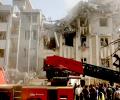
Israeli strikes at multiple targets in Iran; Tehran strikes back at Tel Aviv.
